A look at the tools and approaches that Fondo Tierra Viva and Ecos Fund/ISPN have refined through decades of work with community organisations.
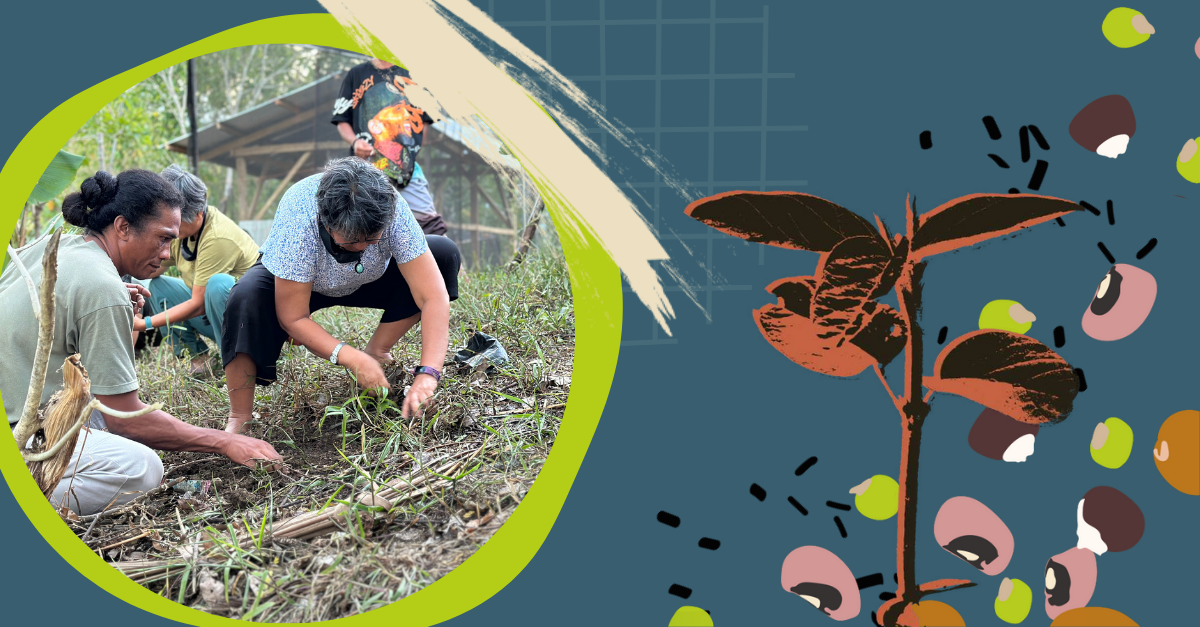
Strengthening local organizations is a familiar concept in philanthropy – often framed around capacity-building, compliance, or technical training. But for the member funds of the Alianza, strengthening is something deeper: a long-term, relational practice rooted in trust, reciprocity, and the realities of the territories. It is not a service delivered to communities, but a process carried out with them, attentive to their pace, their knowledge, and their visions of the future.
In this Seeds of Practice session, an internal learning space within Alianza, co-organized by Fondo Tierra Viva (Central America) and Ecos Fund/ISPN (Institute, Society, Population and Nature – Brazil), members explored how strengthening takes shape across different contexts, what tools and methodologies have emerged over the years, and what it truly means to support the autonomy and resilience of grassroots organizations.
Strengthening Begins With People, Not Procedures
Fondo Tierra Viva opened the session by reframing organizational strengthening around a simple but powerful premise: organizations are made of people. Any effort to “strengthen” an organization starts with identifying who the leaders are, what processes they are driving, and what vision they hold for their territories.
Strengthening, therefore, is not a checklist of training. It is a double-sided relationship, one that involves listening, building trust, co-identifying opportunities, and improving practices together. Sometimes the improvements lie within the grassroots organization; sometimes, they require changes inside the fund itself. “It is a process of mutual understanding in which we gradually build trust, identify joint opportunities for collaboration, and improve together”, explains Jaime Guillen, Communication and Institutional Development of Tierra Viva.
He also emphasized that trust is learned much like riding a bicycle: you do not learn while someone holds you the entire time — you learn by trying, falling, adjusting, and trying again. Trust grows through shared attempts, shared mistakes, and shared learning.
Under this lens, strengthening becomes a pathway toward resilience, helping organizations navigate relationships with other NGOs, donors, local governments, and even economic initiatives. Transparency, accountability, political legitimacy, and internal balance all become part of the ecosystem of strengthening.
Rather than offering a rigid program, Tierra Viva works responsively, tailoring support to the needs of each group. Tools include technical advising, peer exchanges, thematic trainings (e.g., gender, climate), leadership development, and participation in broader movements.
Tools That Serve Methodologies. Not the Other Way Around
From Brazil, the Ecos Fund/ISPN team contributed a complementary perspective: strengthening is also about developing management and monitoring tools that help organizations better understand their own work.
After decades of experimenting with different systems, and after failed attempts to adopt commercial platforms not suited to community realities, the fund arrived at an important conclusion: tools must adapt to the fund’s methodology, not force the methodology to adapt to a tool. “We have a solid methodology – thirty years of operation – and we don’t want to adapt this methodology to an already existing system”, highlighted Renato Farias, forest engineer and data analyst at Ecos Fund/ISPN.
This philosophy led to the creation of Sistema Coruja (Owl System), an open-source digital platform developed internally to support project management, monitoring, and accountability in ways that are intuitive for both fund staff and grantees. The system organizes everything from deadlines and activities to indicators, budgets, receipts, and field reports, integrating low-cost tools like Google Drive to ensure accessibility.
What matters most, as Renato explained, is not the sophistication of the software, but how it supports the learning process of local organizations. In many communities, especially those with limited literacy or technological familiarity, simple, practical tools can become an important form of empowerment.
As part of the session, Ecos also shared findings from a brief survey across Alianza members. The responses confirmed that strengthening goes far beyond financial support: funds accompany organizations in governance, administration, communication, gender equity, political participation, resource mobilization, and more. While methodologies vary, the intention is similar: to support people and organizations in building the skills, systems, and confidence they need to act with autonomy.
Strengthening as a Shared Journey
A recurring theme throughout the discussion was reciprocity. Strengthening is not a one-directional flow of knowledge from the fund to the community. It is a relational process in which funds also learn about their tools, their assumptions, their internal practices, and their roles within broader ecosystems.
Across the Alianza, funds have been experimenting with co-created manuals, adaptations to include Indigenous languages, more flexible reporting formats, and strategies to engage youth in digital and financial processes. These innovations also emerge as responses to shared challenges in the community organizations, such as limited access to flexible funding, administrative capacity gaps, the complexity of measuring impact, and the accelerating impacts of the climate crisis.
These diverse practices point to a shared principle: strengthening grows when tools and methodologies adapt to people, not the reverse. Organizational strengthening is not only about capacity-building, it is about cultivating ecosystems of resilience.