Reflections from London Climate Action Week on risk, proximity, and the role of Global South
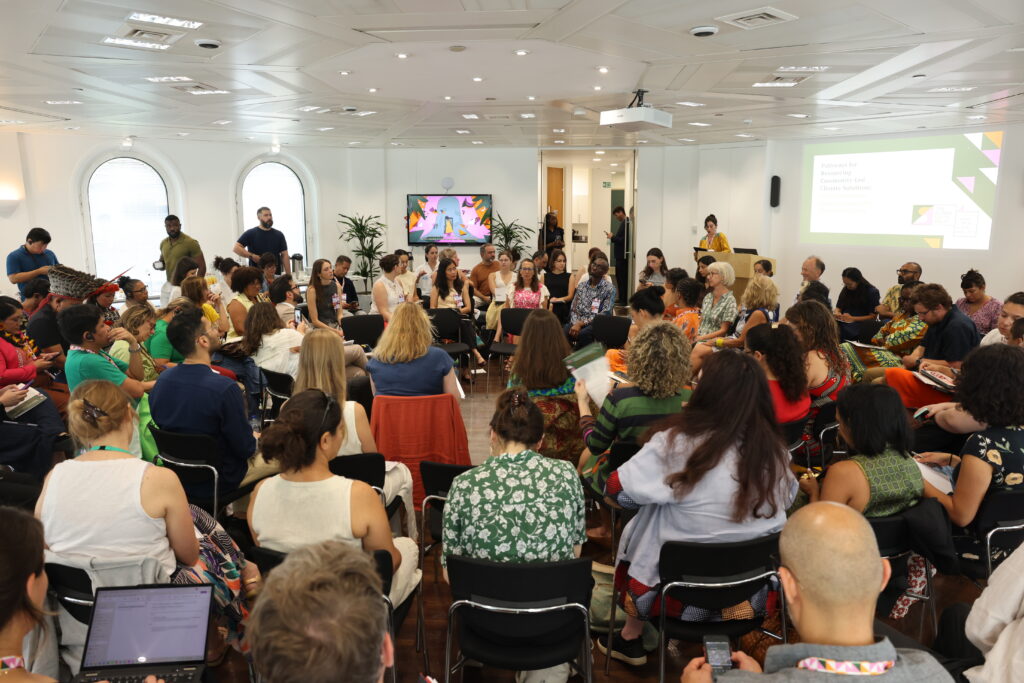
Alianza was present at London Climate Action Week 2026, joining partners, member funds, and allied organizations in key conversations on how climate and nature finance can better reach the communities, territories, and locally rooted institutions already responding to the climate crisis.
Throughout the week, Alianza’s presence was closely connected to The Global South House, our platform convened together with Rede Comuá, the Amazon Community Funds Network, and partners to foster strategic dialogue and help reshape climate and nature finance so that resources reach the people and places where they can make the greatest difference. During London Climate Action Week, this work continued through public debates, partner events, informal exchanges, and dedicated moments of connection among members.
The main highlight of the week was Pathways for Resourcing Community-Led Climate Solutions: A multistakeholder dialogue promoted by Global South funds, on 23 June at RELX Headquarters. The event, supported by WINGS, F20, Global Witness, and the Lift Up Philanthropy Fund, brought together representatives from philanthropy, financial institutions, civil society, community-led funds, Indigenous Peoples’ organizations, and other actors to examine how current financial architectures shape the flow of resources and what it will take to redesign them in more direct, equitable, and territorially grounded ways.
Opening the conversation, Juliana Tinoco, Executive Coordinator of Alianza, invited participants to reflect on one of the most influential concepts in finance, investment, philanthropy, insurance, and development: risk. Her remarks challenged the audience to ask who defines risk, from which realities, and with what consequences. While financial institutions often understand risk as the possibility of losing capital, Indigenous Peoples and local communities may experience risk as the possibility of losing rivers, rights, collective memories, territories, and lives.
This reflection became a key thread throughout the event: if risk shapes decisions, then proximity shapes how risk is understood. Those closest to the impacts of climate change are often the first to understand its risks, yet remain among the furthest from the systems where those risks are defined and financed.
Across the discussions, speakers emphasized that climate finance cannot be reduced to headline numbers. The question is not only how much money is mobilized, but how it moves, under what terms, and who gets to decide where it goes. Participants also highlighted the need to address harmful finance, debt burdens, currency hierarchies, centralized mechanisms, and restrictive risk frameworks that continue to prevent resources from reaching those already reducing climate risk on the ground.
The conversation also brought attention to the existing infrastructure of Global South-led funding mechanisms whose strength lies not only in moving capital, but in their proximity to territories, relationships, knowledge systems, and lived realities. As Juliana noted in her opening remarks, these mechanisms do far more than channel finance: they build trust, strengthen local institutions, support community leadership, and create the conditions that make investment possible.
For The Global South House, the gathering was also an opportunity to deepen a broader political conversation: how to build shared language and stronger connections across the capital spectrum, while recognizing that those who protect territories are not a risk to investment, but among its greatest sources of resilience.
Alianza and The Global South House were also represented by Juliana Tinoco in Funding Climate Action at Scale: Lessons from Effective Global Philanthropy, hosted by the Global Alliance for Green and Gender Action (GAGGA) and Alliance magazine. The event explored why some of the most effective climate solutions remain underfunded, with a focus on gender-just, locally led approaches and their role in building long-term resilience.
In that conversation, Juliana challenged one of the most persistent assumptions in climate finance: that scale depends on standardization, centralization, or replication.
“Not every local solution needs, wants or makes sense in terms of scale and diversity. Respect for social, cultural, and ecological dynamics is actually what’s going to bring efficiency to those solutions, and not the traditional understanding of scale.”
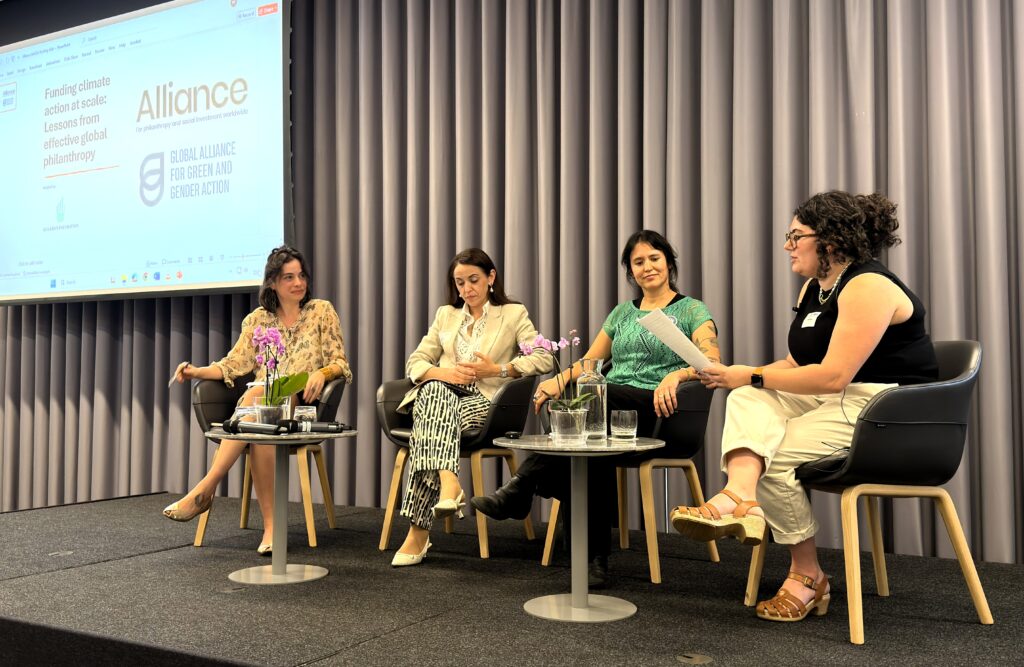
This perspective echoed one of the core messages carried by Alianza throughout the week: effective climate action depends not only on supporting individual projects, but on investing in the ecosystems, relationships, and institutions that allow diverse local responses to thrive. In the GAGGA discussion, this question was also closely connected to gender justice, recognizing that women-led and community-based organizations are often the first responders during climate crises and long-term stewards of ecosystems and community resilience. You can watch the full event here.
Beyond these two main spaces, Alianza member funds, including Casa Fund, ISPN/Ecos Fund, Samdhana Institute, Youth Climate Justice Fund, FunBEA, and Environmental Justice Fund, promoted and participated in several conversations across London. Their presence reinforced the importance of bringing Global South funds into the spaces where climate finance agendas are debated, not only to give visibility to existing solutions, but to help shape the political, financial, and narrative shifts needed for resources to move closer to communities.
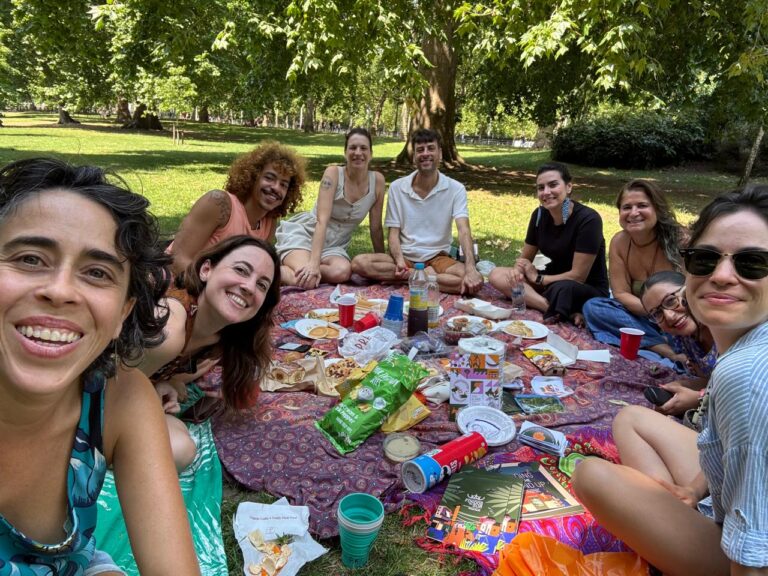
As part of the week, Alianza also organized a picnic with members. A simple but important moment to pause, reconnect, and create space for deeper exchanges beyond formal agendas. As in other moments of the network’s journey, these informal gatherings are part of how Alianza sustains relationships, strengthens trust, and creates the conditions for collective reflection and action.